Typhoon Aid Reaches Remote Areas of Central Philippines
Typhoon Aid Reaches Remote Areas of Central Philippines
Sailors assigned to the U.S. Navy's forward-deployed aircraft carrier USS George Washington, Marines assigned to the 3 Marine Expeditionary Brigade, and Philippine civilians unload relief supplies in support of Operation Damayan. ((U.S. Navy photo by Mass Communication Specialist Seaman Beverly Lesonik)
International aid is starting to reach remote areas of the central Philippines, 10 days after the region was devastated by super Typhoon Haiyan.
U.S. military helicopters delivered food, water and other supplies to villagers on Leyte island and in other remote communities on Monday. The U.S. aircraft carrier USS George Washington is serving as the hub of the helicopter missions.
Speaking at a briefing in Manila, OCHA spokeswoman Orla Fagan said 10- to 12-million people needed help to recover from the November 8 storm.
The U.N. agency said relief operations have been hampered by infrastructure problems, including a lack of electricity, poor communication, impassable roads and little access to fuel.
Philippine President Benigno Aquino continued a tour of typhoon-hit areas on Monday, handing out relief goods to residents of Palo on Leyte.
He said he was tempted to "despair" of the situation, but added that doing so would hamper the work of everyone.
Aquino has vowed to stay in the typhoon-battered center of the country until he is satisfied with the progress of the aid efforts.
The Philippine government said the typhoon killed at least 3,974 people and left about 1,200 others missing. Many of them were swept away and drowned in a huge storm surge triggered by one of the strongest cyclones on record to make landfall anywhere in the world.
The U.S. government announced a further $10 million in aid, bringing its commitment so far to $37 million.
Some information for this report was provided by AP, AFP and Reuters.
Images from the Philippines
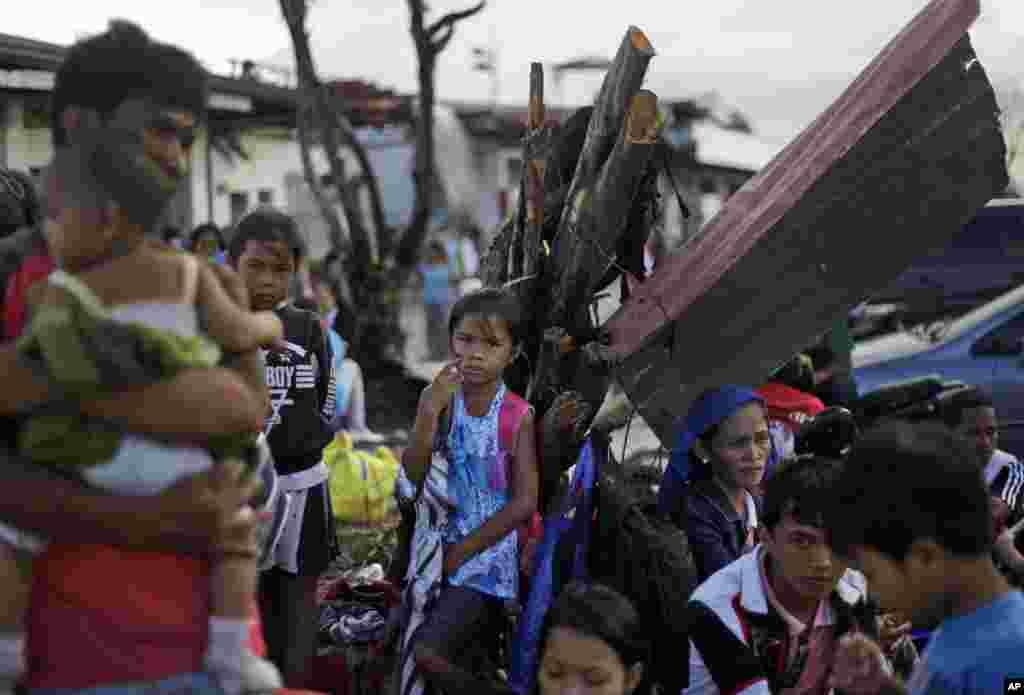
1/11Typhoon Haiyan survivors wait for their evacuation flights at the airport in Tacloban, Philippines, Nov. 21, 2013.
དེ་ལས་མང་།Show less
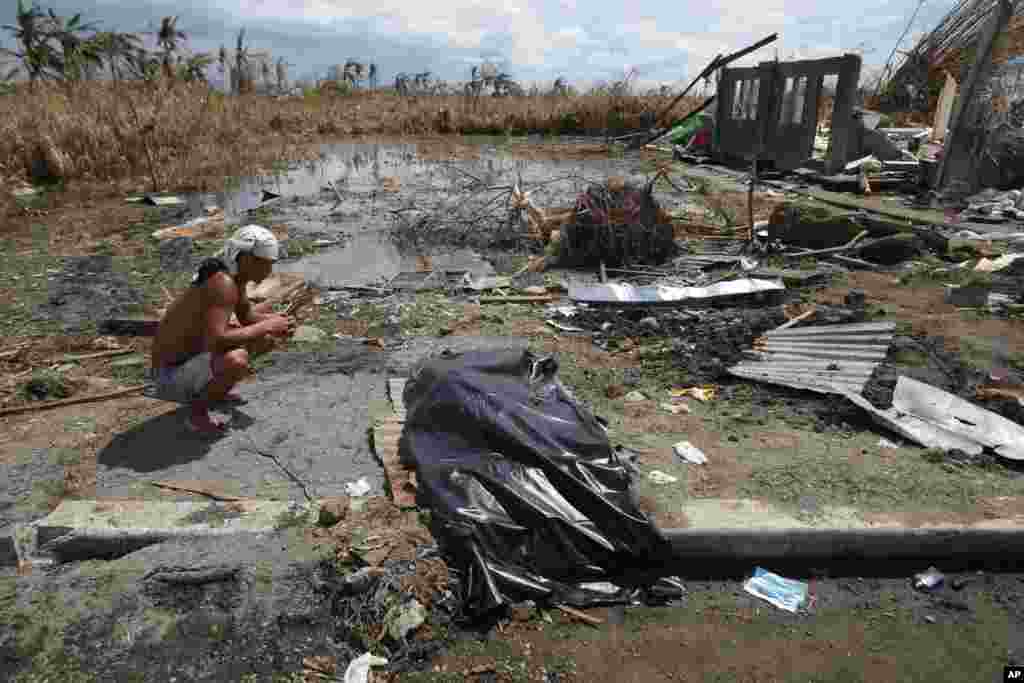
2/11A typhoon survivor sits beside the body bag containing his child in Tacloban, central Philippines, Nov. 20, 2013.
དེ་ལས་མང་།Show less
3/11A Philippine Air Force crew looks out from his helicopter as Typhoon Haiyan-ravaged city of Tacloban is seen in the background, during a flight to deliver relief goods, Nov. 19, 2013.
དེ་ལས་མང་།Show less
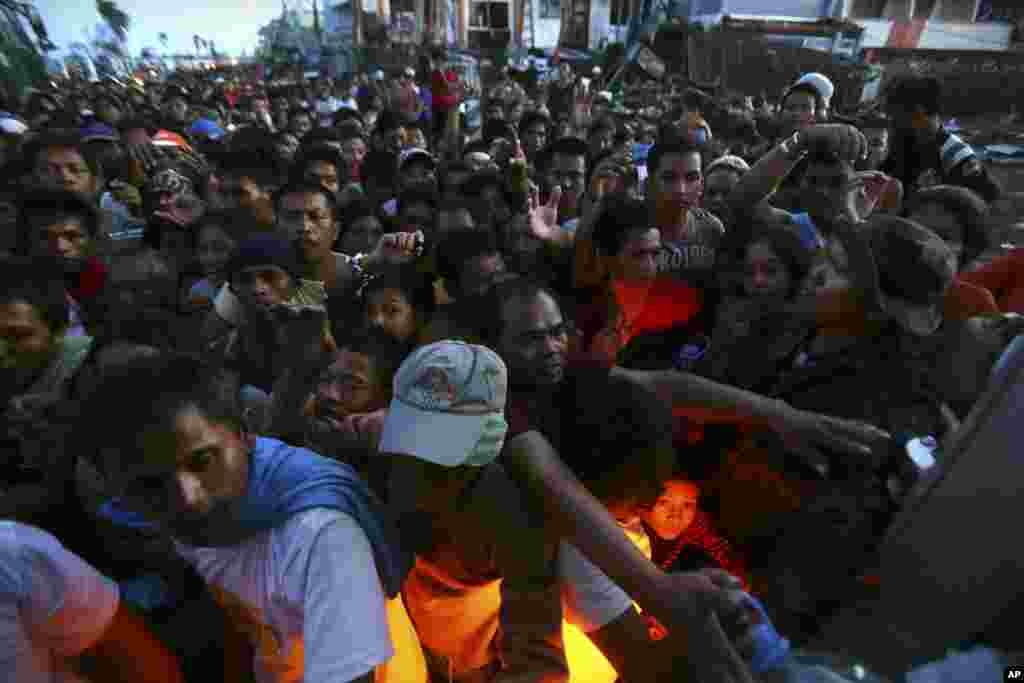
4/11The brakelight of a delivery truck lights up a boy's face as survivors struggle to be the first in line during the distribution of relief goods in typhoon-hit Tacloban, Philippines, Nov. 18, 2013.
དེ་ལས་མང་།Show less
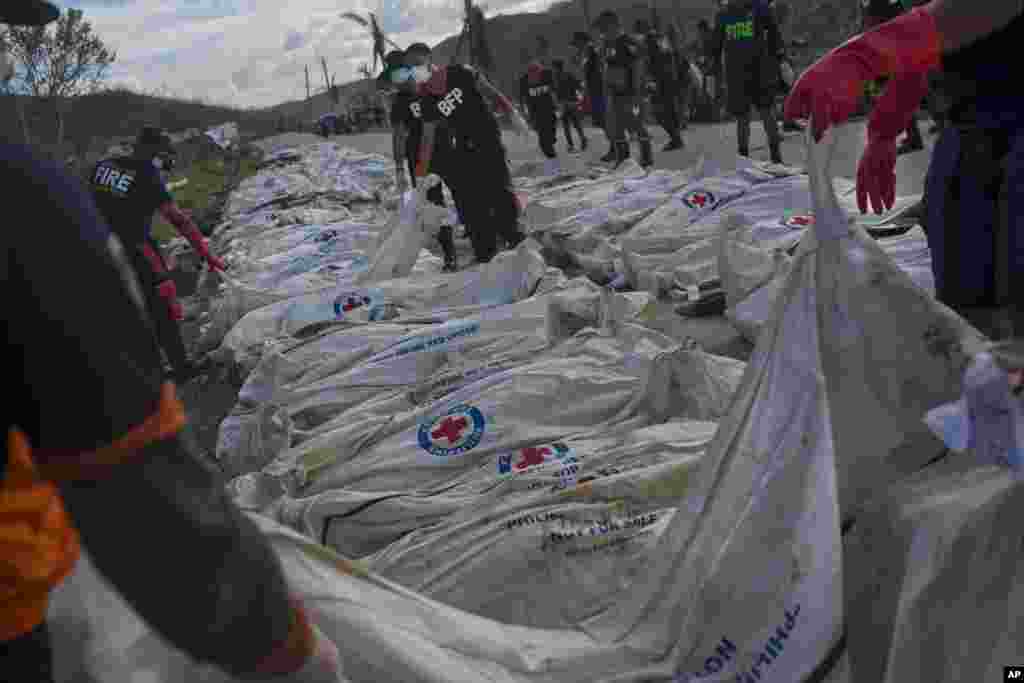
5/11Firemen unload Typhoon Haiyan victims in body bags from a truck on the roadside until forensic experts can register and bury them in a mass grave outside of Tacloban, Philippines, Nov. 19, 2013.
དེ་ལས་མང་།Show less
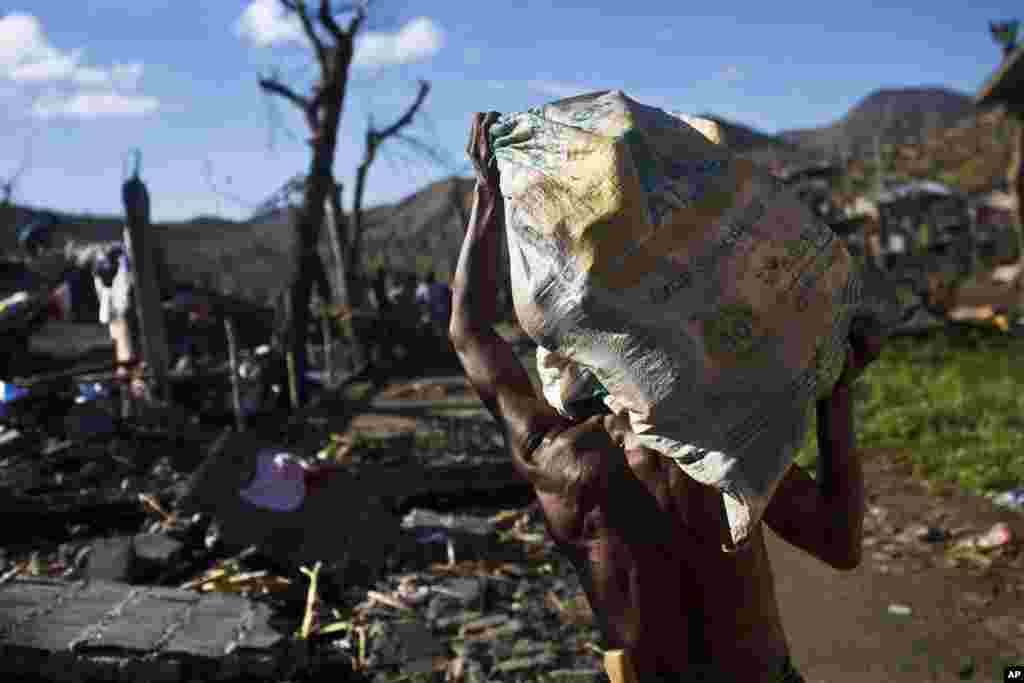
6/11A Typhoon Haiyan survivor carries a bag of his recovered belongings in the ruins of his rural neighborhood on the outskirts of Tacloban, Philippines, Nov. 18, 2013.
དེ་ལས་མང་།Show less
7/11A man uses a shovel to clean up mud inside St. Joseph Parish church, which was badly damaged by Typhoon Haiyan in Tacloban, Philippines, Nov. 18, 2013.
དེ་ལས་མང་།Show less
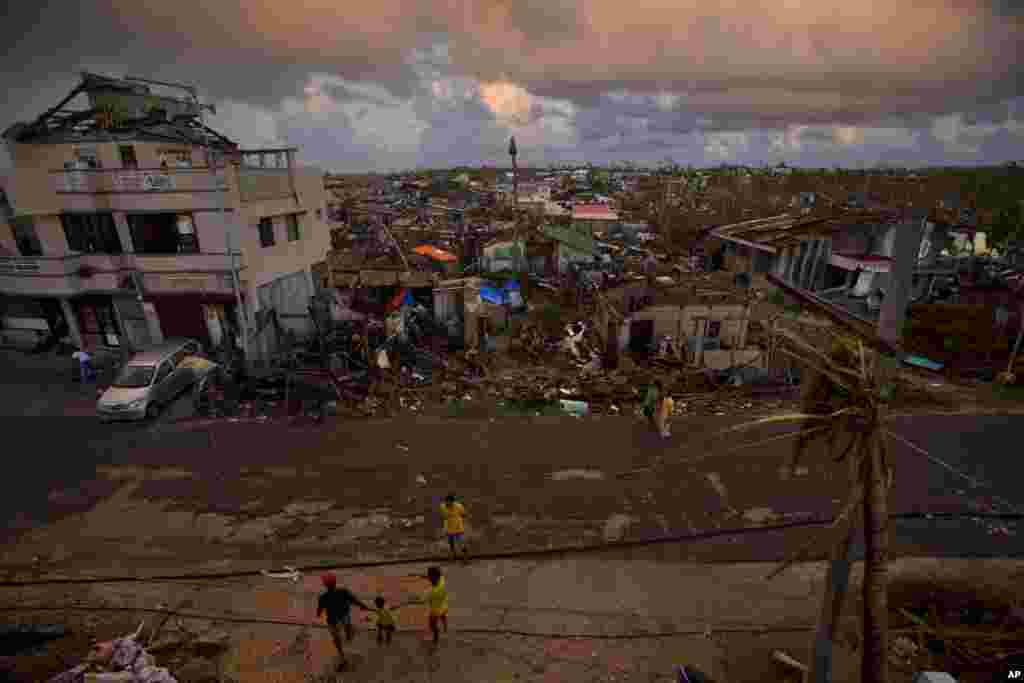
8/11Typhoon Haiyan survivors walk along a road in the destroyed port in the town of Guiuan, Philippines, Nov. 15, 2013.
དེ་ལས་མང་།Show less
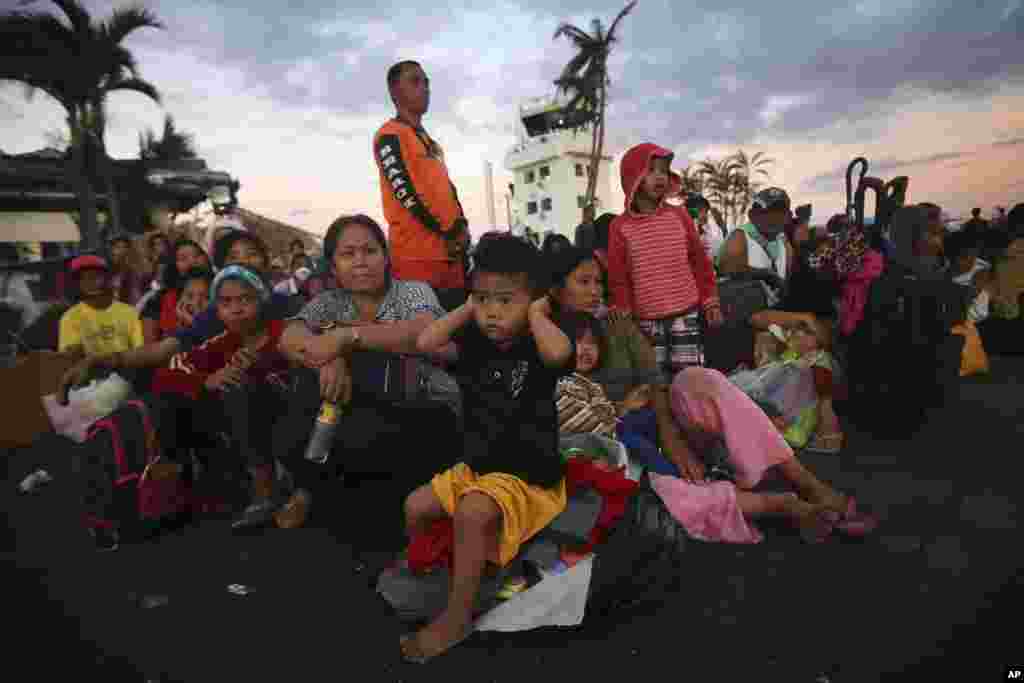
9/11A young boy, a survivor of Typhoon Haiyan covers his ears as military C-130 aircraft land at the airport in Tacloban, central Philippines, Nov. 15, 2013.
དེ་ལས་མང་།Show less
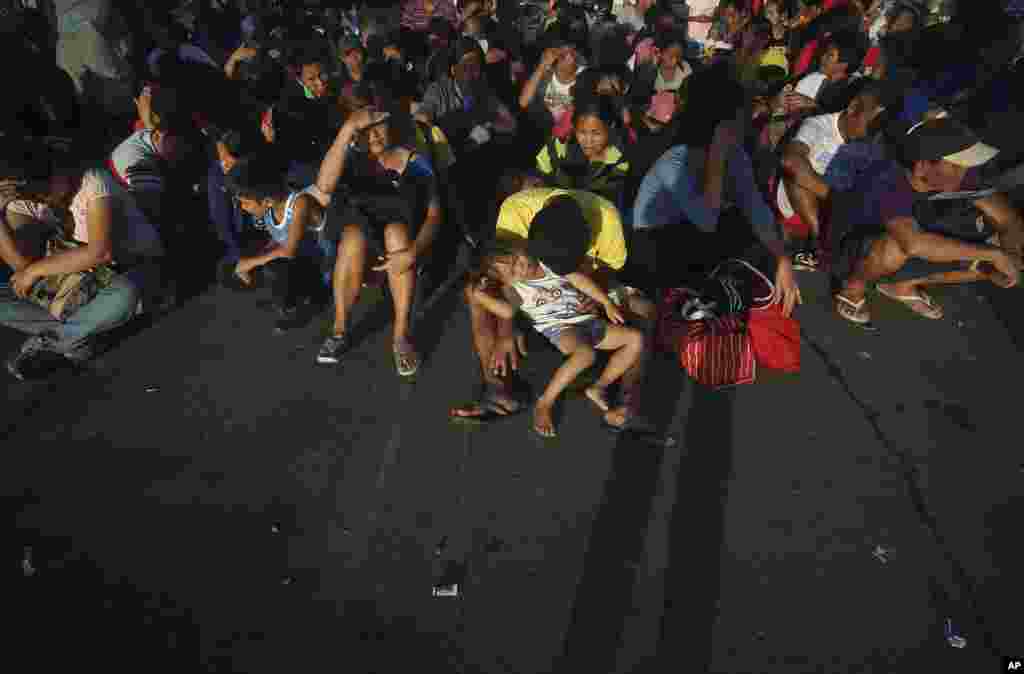
10/11Survivors of Typhoon Haiyan shade themselves from the rising sun after spending the night on the tarmac in the airport in Tacloban, where they wait to be evacuated, Nov. 15, 2013.
དེ་ལས་མང་།Show less
11/11Toppled coconut trees dot a mountain in an area devastated by typhoon Haiyan in Leyte province, central Philippines, Nov. 15, 2013.